Showing posts with label Nutrition. Show all posts

Friday, August 20, 2010

Pickl-It party

Have you ever wondered what 25 pounds of tomatoes, 3 pounds of basil, and 10 pounds of beets look like? Wonder no more...

My good friend Susan told me about a great deal her CSA is having right now, and I just had to get in on it with her. So with plans to do some freezing and lacto-fermenting, we signed ourselves up for these insane amounts of produce.

This morning was our Pickl-It party, which is really just a fancy way of saying "hey, let's do this together so that maybe the kids will keep each other occupied long enough for us to make a dent in these huge quantities." The box of tomatoes and the bag of basil are all mine (Susan got her own) and we decided to split the beets between us.

Phase 1 of the plan is to peel and slice/grate the beets and throw them into Pickl-Its for yummy, lacto-fermented pickled beets - they're probiotic! Phase 2 is to process the basil with olive oil and freeze in small portions for quick pesto-making and sauce-seasoning all winter long. And finally, phase 3 of the plan is to core and freeze the tomatoes for use in stews and sauces this winter (because anything in a can is bad, but canned tomatoes are especially unhealthy due to their acidity which leeches even more BPA; jarred tomatoes are really expensive).

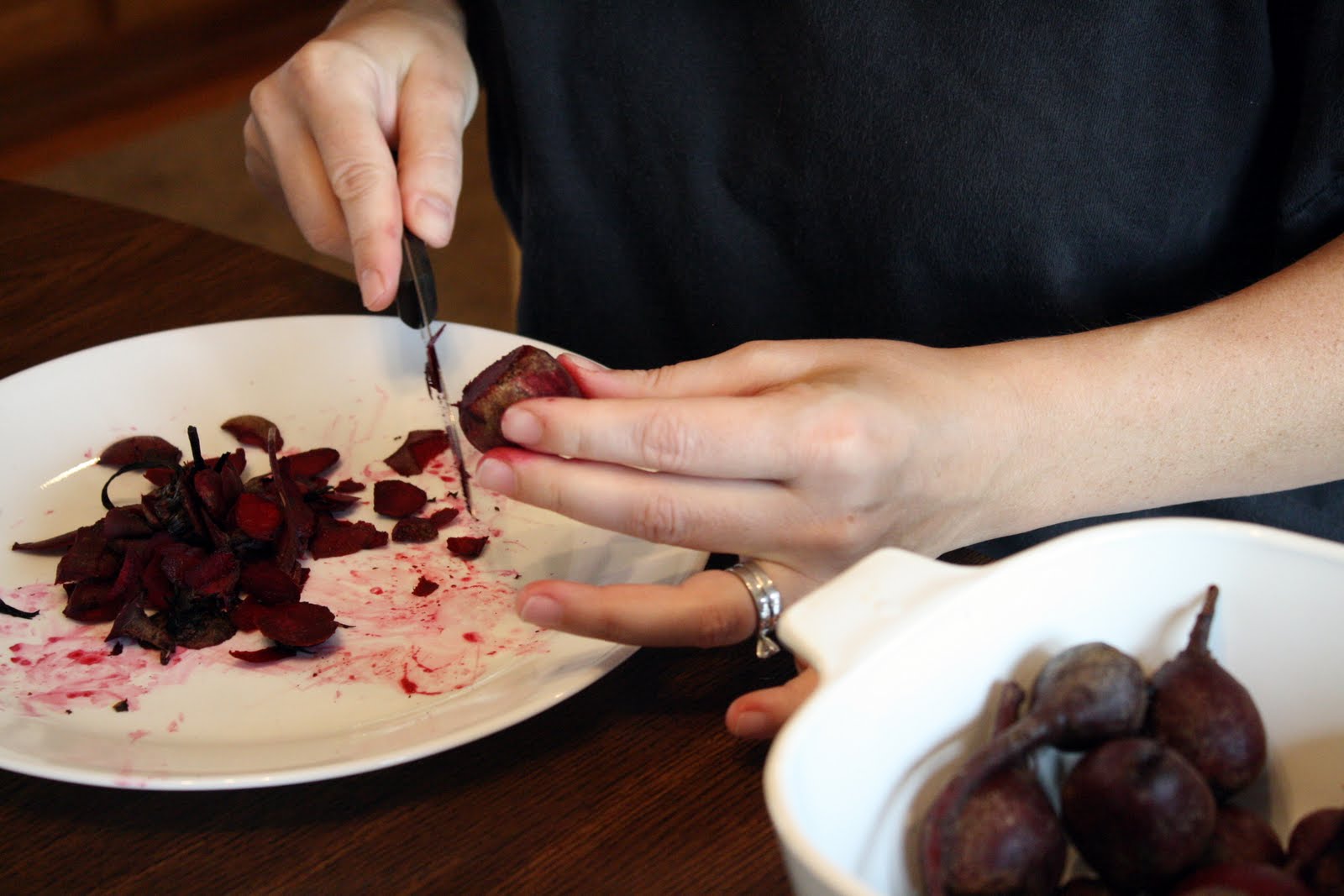
Were we insane to think we could plow through 10 pounds of the beets in 3 hours while the 2 toddlers and an almost-1-year-old played, and the baby slept? Maybe. Other than a few scuffles over tinker toys and blocks, and meeting the expected needs of the younger two, we did make some progress. We were able to wash and peel about half of the beets. Don't they look like rubies?

This is my hand - after scrubbing with soap, even.

Looks like I have my work cut out for me this afternoon...the food processor will get a nice workout. It's also a good thing we found a freezer on Craigslist - the basil and tomatoes will be nice and cozy with the 1/4 grass-fed cow and 25 gallons of raw milk we put in it last week. Dreaming of getting a food dehydrator now...

Saturday, July 24, 2010

Probiotic Pickles

After reading this post my mouth was watering for pickles. And not only are lacto-fermented pickles tasty, but they are loaded with health benefits.

“The proliferation of lactobacilli in fermented vegetables enhances their digestibility and increases vitamin levels. These beneficial organisms produce numerous helpful enzymes as well as antibiotic and anti carcinogenic substances. Their main by-product, lactic acid, not only keeps vegetables and fruits in a state of perfect preservation but also promotes the growth of healthy flora throughout the intestine.” – Sally Fallon, co-author of Nourishing Traditions (Here is more interesting info if you're interested.)

While picking up groceries at the co-op last night I saw organic pickling cucumbers, so I grabbed some along with the spices called for in the recipe at the link above (so thankful for my new smart phone! It was easy finding this recipe while standing in the produce department.)


After getting the girls down for their afternoon nap I got to work. Maybe "work" isn't the right word, because it was actually super easy and fun - kind of a cross between making a cake from a boxed mix and playing Tetris. Seriously.


I had bought the 10 or so dry spices in bulk, so each was in its own little baggie and required dumping into a bowl (out of the 5+ cups it made, the recipe only calls for 2 Tbs per 4lbs of cukes.) In another bowl I mixed the salt and water together for the brine. And then after washing the pickling cucumbers and cutting up an onion came the fun part: packing them into the Pickl-It jars Tetris-style.

I had enough cucumbers to fill four 1.5 liter jars so I adjusted the rest of the recipe accordingly, and before I knew it the jars were filled.

"Really? That's it?" I thought to myself. "That was sure easy!"

Now for the most difficult part of this whole process...waiting until they're done :)

Wednesday, March 10, 2010

Milk Freedom


This morning Claire and I headed to Wisconsin in support of real milk. I had been reading about the upcoming legislative hearing for weeks and really wanted to attend, but didn't think I'd be able to; at the last minute (8am) my schedule unexpectedly opened up and we were on the road by 9. The turnout at Chippewa Community College was great and by the time we arrived, about 15 minutes after it started, the auditorium was already packed and didn't even have standing room left. We didn't have to wait long before several classrooms were opened up for overflow where we watched the proceedings on tv. We met up with some friends who arrived shortly after we did, and I had the privilege of sitting between a farmer and an RN/health educator, both very knowledgeable and strong supporters of raw milk. This is our version of "the big game"...we spent almost 3 hours glued to the action, cheering at some points and rolling our eyes in disgust at others. "Seriously, you're going to compare the sale of raw milk to the sale of melamine-tainted baby formula?! Come on!"

One issue here is freedom of choice; if I want to drink unpasteurized milk, then I should be able to legally do so. It makes no sense that foods containing trans fats and other health-damaging toxins are legal to buy and consume, yet raw milk - which has proven health benefits - is such a problem. Raw milk is a living food with good bacteria (probiotics) and enzymes necessary for digestion. In milk from healthy, grass-fed cows, the good bacteria help to regulate the bad bacteria. The pasteurization process kills all of these benefits, rendering it a dead, nutrition-less food. My family of 2 adults and 1 toddler consumes 3 gallons of raw milk every week, and we have only seen our health improve in the 1.5 years we've been drinking it. And the same goes for the dozens of people we know who also favor unadulterated dairy. In fact, I know of more cases of food poisoning caused by pasteurized products than raw...when I was a kid in the '80s my mom became seriously ill and was hospitalized after eating Kemp's ice cream, thanks to an outbreak of Listeria. A quick Google search turns up numerous recent recalls for Kemp's ice cream alone. But that's not too surprising, considering where their milk and cream come from, and how it's handled. I won't get into the whole "cows weren't born to eat grain" argument right now, but the reality is that grain-fed cows are unhealthy and therefore produce unhealthy milk that justifies pasteurization (but still doesn't have health benefits). Milk from grass-fed cows is a completely different story, and should be treated as such.

Another issue is access - imposing strict regulations and requiring large amounts of paperwork is not going to change the safety. It is only going to hurt the small farmers - the very farmers we raw milk drinkers want to do business with. I love the fact that my farmers drink the raw milk their cows produce, too. They are a small operation committed to raising a healthy herd while improving the environment. I love the level of trust one is afforded when dealing directly with a farmer, as opposed to the national companies who see customers as nameless numbers. Who is going to strive for better quality, the farmer who knows the customers personally and invites them to the farm for a BBQ each summer, or the farmer who never sees customers but knows that his milk will be pasteurized?

I'm reminded of the recent peanut recall in 2009. I got a letter in the mail one day from Sam's Club, notifying me that a product I had purchased was included in this recall and they were offering me a full refund. I went in, confused, because I hadn't bought food from Sam's Club in over a year. "Which product was it?" I asked, thinking they must have me confused with another Nelson. "Let's see..." the employee scrolled through computer screen after computer screen until she located the offending product: Kashi granola bars that I had purchased just before I got pregnant with Claire. I think it was around January 2007. The same granola bars that I ate throughout my pregnancy. Lovely! Because of a negligent company who knowingly failed health inspections but chose to send products out anyways, my baby and I could have become seriously ill or died. And it took them nearly 2 years to trace the product to me to let me know! It's about accountability, and the large companies don't always have it. I put my trust in the farmers and producers I can meet face-to-face, and who have ways of contacting me within hours of detecting a problem, rather than 2 years later. Here's another great article about this issue.

These are some of the reasons it was so important for me to attend this hearing today. As a consumer I had to show my support for the small farmers who would be most affected by this bill. I'm so grateful that everything fell into place so I could go, and so thankful that Claire was content to tag along. She enjoyed the hour-plus drive to Eau Claire, loved the long walk from the student parking lot to the auditorium, and made lots of new friends throughout the day; all it took to keep her happy was some homemade granola, a notebook, a pen, and a baggie of crayons. Oh, and one of the hats pictured in this article. I should have gotten a picture of her wearing it!

Here's Claire in the walkway that ran over the busy street between the parking lot and auditorium - she's obsessed with tunnels, and loved how her voice echoed inside this one. She also loved the crowds of cool college kids, and was quite a hit with them, too :)

Monday, January 18, 2010

"[Organic food] is for rich people who hate themselves."

-Amy Poehler's character in Baby Mama

I'll admit, there was a time when my impression of organic food wasn't all that different from the quote above. I would pass the small section of organic food in the grocery store and wonder why on Earth anybody would pay more when the "regular" food looked perfectly fine...it was being sold in the grocery store, so it had to be safe, right? I pictured the typical organic food buyer to be a persnickety bore with unreasonable expectations. Ok, maybe that's a little harsher than what I thought, but I absolutely thought that organic food was unnecessary.

But do you know what is truly unnecessary? Harmful chemicals in our food. According to an investigation by the Environmental Working Group, Peaches and apples had the most pesticides detected on a single sample, with nine pesticides on a single sample, followed by strawberries and imported grapes where eight pesticides were found on a single sample of each fruit. If persnickety means not wanting a nine chemical combo on your fruit, then sign me up. These chemicals, which are designed to be toxic so that they will kill "undesirable" living organisms that threaten the crops, don't differentiate between bugs and humans. Some of their toxic effects include nervous system effects, carcinogenic effects, hormone system effects, and skin, eye, and lung irritation. Yes, these chemicals meet certain safety guidelines, but do you know - and are you comfortable with - the tolerance that somebody else has established for them? Are you also aware that no tests have been done on the possible synergistic effects of multiple chemicals that are on the same foods, or different foods eaten together? There is no way to know for sure what is happening to our bodies by these toxic cocktails. And that a chemical is considered safe today is no guarantee that it won't be banned tomorrow...remember when DDT was an acceptable agricultural pesticide? Don't allow yourself or your family to be a guinnea pig for these chemicals, which will likely be proven unsafe in the future.

In addition to personal health and safety, don't forget about the environment. Let's take a look at the differences between conventional and organic farmers. Conventional farmers apply fertilizers to promote plant growth, spray insecticides to reduce pests and disease, use chemical herbicides to control weeds, and give animals antibiotics, growth hormones, and medications to prevent disease and spur growth. It's expensive, unhealthy, and it's not sustainable. Organic farmers, on the other hand, apply natural fertilizers (such as manure or compost) to feed soil and plants; use beneficial insects and birds, mating disruptions or traps to reduce pests and disease; rotate crops, till, hand-weed or mulch to manage weeds; give animals organic feed and allow them access to the outdoors; they also use preventive measures - such as rotational grazing, a balanced diet, and clean housing - to help minimize disease. This method of farming is solar powered, works with nature, and is healthier for every plant, animal, and person involved.

I started writing this post a few days ago - which is not unusual for me, considering Claire's short attention span and other things that keep me busy around here - and today I was pleasantly surprised to open the latest issue of Time magazine to find this article: "How Cows (Grass-Fed Only) Could Save The Planet". I won't dive into this right now; grass-fed beef is a whole different entry for another day/week. But this article is a good start until then. An even better resource is The Omnivore's Dilemma, written by Michael Pollan. And if you'd rather sit back and watch a movie, watch the excellent documentary The Future of Food - it's free!

One more thing about organic food. I have heard people referring to food as organic simply because it's "fresh", not frozen, or doesn't come in a box. The organic label is an official certification, and anything that is truly organic must meet certain criteria. Some other words that are thrown around in this arena include "all-natural", "free-range", and "hormone-free." These phrases are subjective, meaning there are no set guidelines or governing body to reinforce what a company is claiming, therefore they are worthless. "Free-range" sounds good, but could simply mean that the chickens are given 5 minutes a day to be outside, and then spend the rest of their time in crowded filth with no sunlight. This is where buying local comes in handy...you will become familiar with the good farms producing healthy food in your area, and will know exactly what you're buying.

Bottom line: unhealthy animals and chemically-laced food do not nourish us or the environment.

Sunday, August 3, 2008

Food, Glorious Food

[Reposted from my old blog]

We've started Claire on solid foods. What an adventure! First it was avocado - and can I tell you, nobody in the history of mankind has ever looked so cute with green paste smeared in their hair, up their nose, inside their ears. It's ridiculously adorable. And watching her eat is so entertaining. We skipped purees and baby food and are going the "baby led weaning" route (weaning as in transitioning to food, not as in weaning from breastfeeding. I think this is a British term. She is still nursing, and probably will for another year or so.) This means that we give her managable chunks of safe foods, the perfect size for her to grasp in her fist, and she feeds herself. No spoons. The theory is that if she's developmentally ready to hold onto the food and put it into her mouth, then she's able to safely swallow it, too. I've read a lot about this and watch her like a hawk while she eats, and so far it's been working really well for us.

So back to the avocado. It's one of my favorite foods, and Mark loves it, too, so we thought it was only natural to make it Claire's first food. Plus it has a nice, bland taste and soft texture, and it's a powerhouse in the nutrition department. She is always interested when I put a few slices on her tray, and immediately picks one up and experimentally squeezes it in her fist. Green mush squishes out from between her fingers, bringing a smile to her face. Then she puts it in her mouth and lightly chews on the end sticking out of her fist, getting little bits of the soft meat in the process. The taste and texture are still new to her, so she makes funny faces that almost make me think she doesn't like it - but she keeps coming back for more, so it can't be that bad. And then she swallows those little bits, shuddering as they go down. What an odd feeling it must be to eat for the first time when you're only used to drinking. It's such a fun and messy process!

Last week I baked some butternut squash, which my mom tells me was Holly's first pureed food - and happens to be one of her favorite foods to this day. Claire and Holly are so much alike, I thought it was fitting for squash to be next in line. So I baked a few small organic squashes and cut them into french fry-shaped pieces once they cooled. They were soft enough to be gummed, but still not quite as mushy as the avocado. Claire did not approve, and after taking several bites started heaving and threw up the few small chunks she had swallowed. I wondered if it was the texture, so I mashed a little bit with a fork and helped her eat with a spoon, but she had the same reaction so I decided to call it a day and wait to reintroduce it some other day. Most recently we tried very-ripe banana slices, which were pretty close in texture to the avocado. She accepted them, but not with the same enthusiasm she had for the avocado.

I cannot wait until she can eat "real" food, I have a feeling she's going to love Mexican! I wouldn't be surprised, because I ate a lot while I was pregnant and she still gets the taste through my milk now. That's the beauty of nursing: babies experience many different tastes depending on what their mom eats. I think once she gets used to eating, she'll have a healthy appetite for lots of different flavors.

Speaking of food, one of my new favorite items is Ezekiel bread. It has sprouted grains, so the nutritional content is much higher. I recently discovered the benefits of sprouted grains, so I've tried sprouting my own as an experiment (just garbanzo beans, so far). I love a few slices of the Ezekiel bread toasted, smeared with several tablespoons of butter - yummmm! And I know what you're thinking, that butter is unhealthy. But I would urge you to do some research (try www.westonaprice.org for starters), and you'll see that saturated fats are NOT as bad as they have been made out to be. They are actually necessary for good health, and it's the rise in vegetable oil consumption that coincides with the rise in heart disease. Isn't that something? All these years we've been told to avoid butter and load up on vegetable oil. Our ancestors had the right idea, and the closer we can get our diets to resemble theirs, the healthier we'll be. It's sad that we have more knowleldge and technology today, yet we're unhealthier than ever. The processed and artificial foods we're eating can't even be called food anymore.

But anyways. It's getting late. I can see lightning in the distance, and I'm hoping for a storm tonight. Time for bed.

Tuesday, January 29, 2008

Real quick

I needed a quick protein boost after my workout, so I grabbed a handful of Planter's sunflower seeds. I happened to look on the jar while I chewed them and noticed the ingredients.

Who's bright idea was it to put MSG in sunflower seeds?! Yes, msg, it's right after the SUGAR.

For crying out loud. I didn't even think to read the label at the store because I thought it was just sunflower seeds and salt. Guess I need to be more diligent when I grocery shop.